
How to Read a NY Cannabis Label
Cannabis 101 · Label Guide
A New York cannabis label tells you exactly what is in the product and proves it was lab-tested, and reading one comes down to a few numbers and symbols that mean the same thing on every legal package.
Knowing how to read a cannabis label means you can compare any two products side by side, ask better questions, and walk out with exactly what you intended to buy. This guide walks through every field: the THC and CBD numbers, how potency is shown differently by format, TAC, the terpene line, the Certificate of Analysis, New York's required universal THC symbol, and the dates. We will give you a straight answer on all of it.
What the THC and CBD numbers mean
The THC and CBD numbers on a cannabis label tell you how much of each cannabinoid the product contains, listed so you can compare one product against another. They are measurement figures, not quality scores.
THC is listed a couple of ways. Raw flower often shows THCA as the primary number. THCA is the form THC takes in the unheated plant; it converts to THC when you apply heat. Total THC accounts for that conversion, so it is the number to use when comparing one flower to another. If a label shows both, Total THC is the comparison figure.
CBD is the second cannabinoid number you will see on many labels. It is non-intoxicating, meaning it does not produce a high on its own. The label shows Total CBD for the same reason it shows Total THC: so you can compare products from package to package.
One note on how to read a higher THC number: it tells you the percentage of cannabinoid by weight, not how the product will affect you or how strong a choice it is. It is a comparison figure. Two people can buy the same product with the same Total THC and have a different experience. The number is useful for comparing, not predicting.
Percent vs milligrams: why flower shows a % and edibles show mg
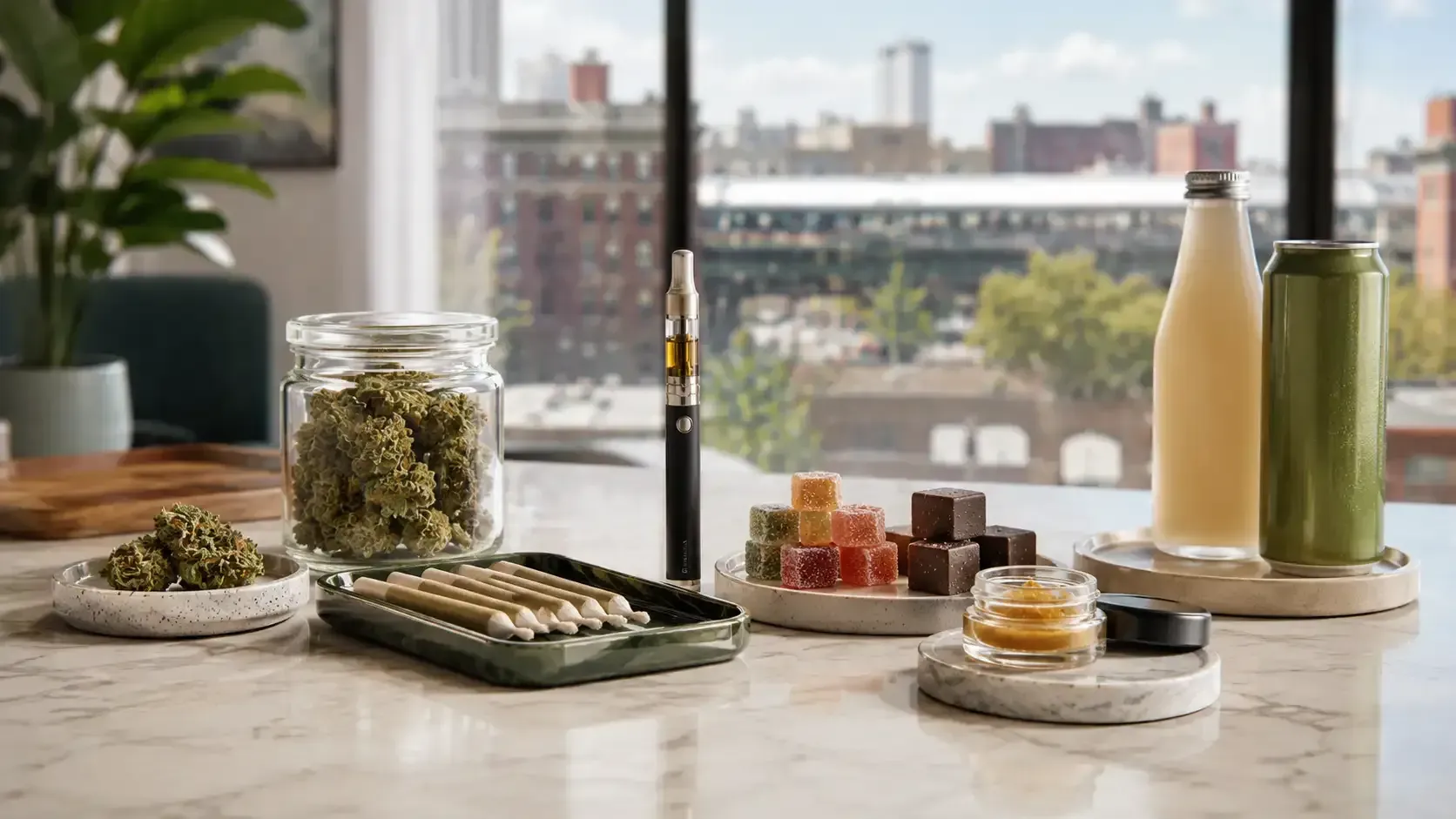
Flower and concentrates show potency as a percentage by weight, while edibles, beverages, and tinctures show it in milligrams per serving and total milligrams per package. The reason is practical: you measure a solid by its weight, and you measure a dose you eat or drink by the amount in each serving.
For flower, the percentage tells you the share of the product's total weight that is THC. A flower labeled at 22% Total THC means roughly 22% of its dry weight is THC. That is how you compare one flower to another.
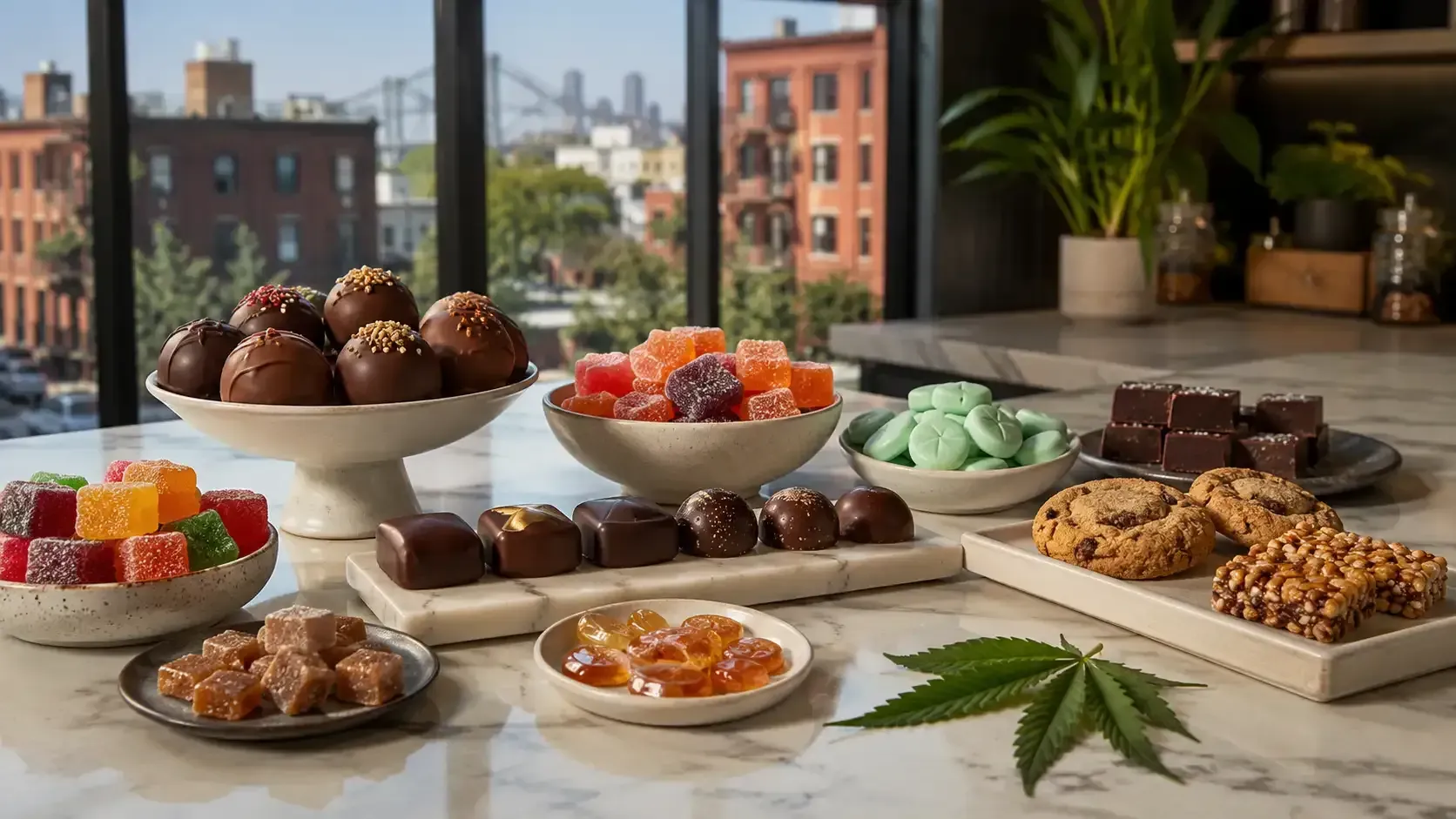
For edibles, beverages, and tinctures, the label lists two numbers: milligrams per serving and total milligrams in the package. A 100 mg package with 10 servings is 10 mg per serving. We walk through how the math works on an edibles label in our edibles guide. For the full breakdown of what each product type is and how it is made, the product types guide covers every format.
The table below shows how potency is displayed across formats. It is a comparison reference, not a strength or dosing guide.
| Format | How potency is shown | What the number means / how to compare |
|---|---|---|
| Flower | Percentage by weight (Total THC %) | The share of the flower's weight that is THC; compare one flower's % to another flower's % |
| Concentrates (vapes, dabs) | Percentage by weight (Total THC %) | Same percentage basis as flower; concentrates measure higher because more plant matter is removed in processing |
| Edibles | Milligrams per serving + total milligrams per package | A measured amount per piece; divide total by number of servings to confirm per-serving mg |
| Beverages | Milligrams per serving + total milligrams per container | A measured amount per drink or per container |
| Tinctures | Milligrams per serving (often per dropper) + total milligrams | A measured amount per marked dropper or serving |
What TAC (Total Active Cannabinoids) tells you
TAC, or Total Active Cannabinoids, is the sum of all the active cannabinoids in the product, not just the THC. You will see it on many New York labels as a third potency number, and it is typically higher than the Total THC figure.
The reason TAC reads higher is that it adds minor cannabinoids alongside THC and CBD. Those include compounds like CBG (cannabigerol) and CBN (cannabinol), which are present in smaller amounts but are still active cannabinoids in the product. The label names them as components; they are listed as part of the product's cannabinoid profile.
TAC gives you a more complete picture of what is in the package. If you see a label listing Total THC at 24% and TAC at 28%, the difference accounts for those additional minor cannabinoids. It is label information, not a separate potency rating.
Reading the strain name and terpene line
Most cannabis labels list a strain name and a strain type, indica, sativa, or hybrid, along with a terpene profile, which are descriptive fields that help you tell products apart. They are classification and composition fields, not effect predictions.
The strain name identifies the specific cultivar: something like Gelato, Blue Dream, or Wedding Cake. The strain type (indica, sativa, or hybrid) is a lineage classification that describes the plant's genetic background. For what those categories actually mean and how they relate to each other, the full explanation is in our guide on what indica, sativa, and hybrid actually mean.
The terpene line lists the aromatic compounds present in the product. You might see names like myrcene, limonene, pinene, or linalool on the label. These are the compounds responsible for the plant's scent and flavor profile. If you are comparing two versions of the same strain from different batches, the terpene line is one of the fields where you can spot differences from batch to batch. It is a composition field, just like the cannabinoid numbers.
The Certificate of Analysis (COA): what lab testing on the label proves
A Certificate of Analysis, or COA, is the third-party lab report that confirms what is in the product and that it was screened for contaminants. It is the document that ties the numbers on the label to a real lab result.
The COA verifies two things. First, that the cannabinoid amounts on the label match what the independent lab found. Second, that the product was screened for pesticides and other contaminants and passed. Both results are in the report.
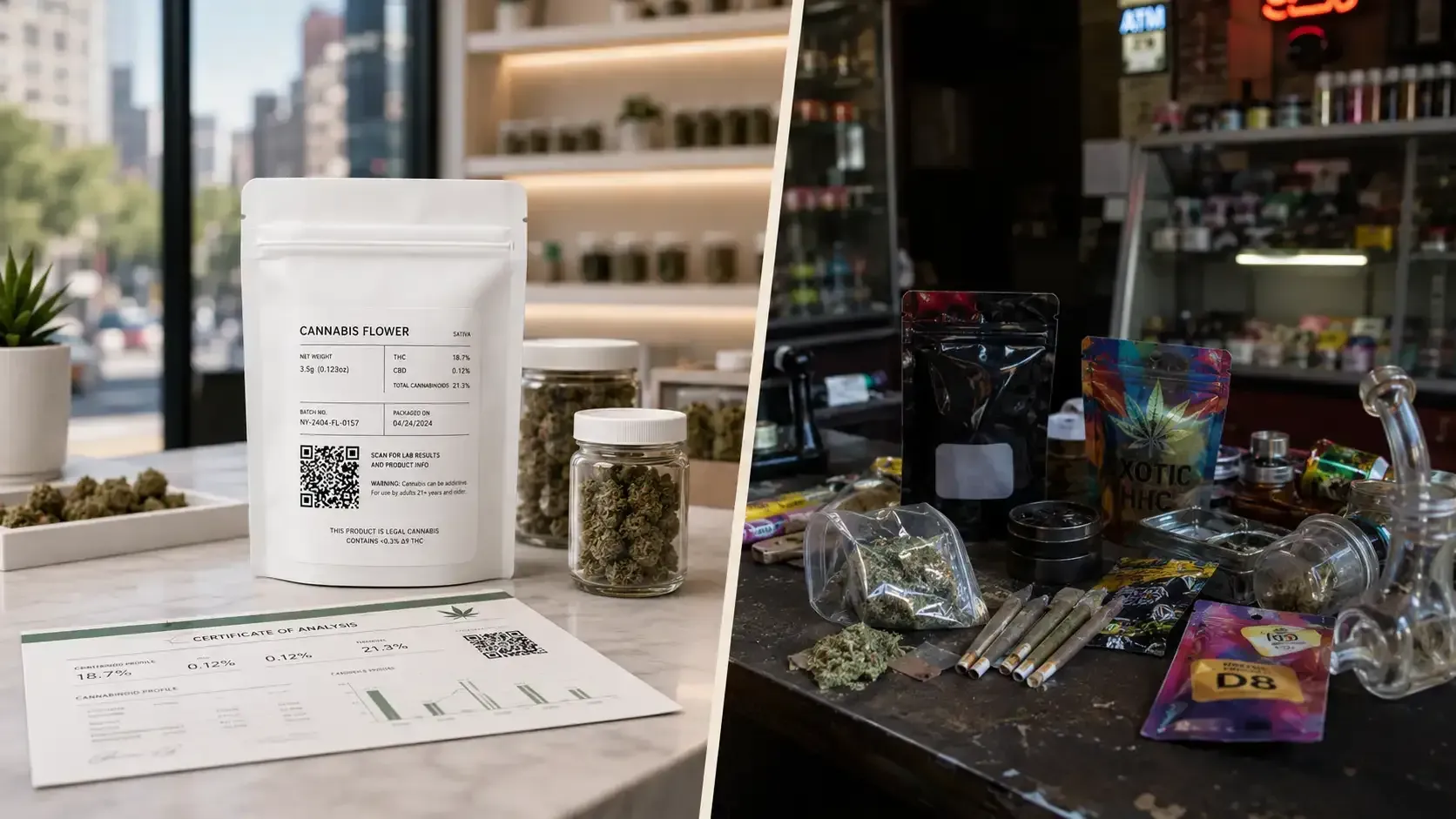
The batch or lot number on the package connects it to that specific lab report. Every production batch gets its own COA, so the batch number is how you know which test applies to your specific product. Most New York cannabis packages also include a QR code that links directly to the COA, so you can pull it up yourself and read the full lab results before you buy.
When you see a batch number and a QR code on a label, that is not just packaging. It is the chain of custody from the lab report to the product in your hand.
How to spot a legal New York label: the universal THC symbol, license info, and batch number
A legal New York cannabis label carries the state's universal THC symbol, the licensed seller's information, and a batch number, and together those marks tell you the product came from a regulated source.
New York requires a universal cannabis symbol on every legal THC-containing package. This state-required symbol designates the product as a tested, regulated cannabis item that contains THC. It is one of the clearest visual signals that a package went through the regulated New York supply chain. When you are comparing packages, look for it first.
The license information on the label identifies the registered organization behind the product. New York's regulated cannabis products are tied to a licensed business, and the label carries that information so you can verify the source. The batch number, which we covered in the COA section, is the third mark: it ties the package to its lab report and shows the product was tested before it reached the shelf.
At Caldwell, every product we carry comes with all three marks. Caldwell Cannabis Co is a licensed adult-use cannabis dispensary regulated by the New York State Office of Cannabis Management, so every label we hand a customer reflects that regulated chain from cultivator to shelf.
Dates on the label: packaged date and expiration
The packaged date tells you when the product was packaged or harvested, and the expiration or best-by date tells you the window the product is intended to be used within. Both are straightforward comparison fields.
When you are looking at two similar products on the shelf, the packaged date lets you compare freshness. A more recent packaged date generally means the product has been sitting for less time. The expiration or best-by date tells you the outer limit the manufacturer sets for the product's intended use period.
You may also see a net weight or volume figure on the label. For flower, this is the weight of the product in the package (in grams). For beverages and tinctures, it is volume. It is the "how much is in here" field, useful for comparing price per gram across flower products or per-ml across tinctures. Read it alongside the potency numbers and you have most of what you need to compare any two products side by side.
New York Cannabis Label FAQ
What does the THC percentage on a cannabis label mean?
The THC percentage on a cannabis label tells you how much of the product's weight is THC, so you can compare one product to another. It is a measurement figure, not a measure of quality or a predictor of how the product will affect any individual. For flower, compare percentages across flower products; for edibles and other dosed formats, milligrams per serving is the relevant number.
What does mg mean on a cannabis label?
On a cannabis label, mg means milligrams of cannabinoid, and edibles, beverages, and tinctures list both milligrams per serving and total milligrams per package. To confirm the per-serving amount, divide the total milligrams by the number of servings listed: a 100 mg package with 10 servings is 10 mg per serving. For a worked example with the full label math, see how the math works on an edibles label.
What is TAC (Total Active Cannabinoids)?
TAC, or Total Active Cannabinoids, is the combined total of all active cannabinoids in the product, not just THC. It includes minor cannabinoids like CBG and CBN alongside THC and CBD, so the TAC figure is usually higher than the Total THC figure. It gives you a fuller picture of the cannabinoid composition listed on the label.
What is a Certificate of Analysis (COA) on a cannabis product?
A Certificate of Analysis, or COA, is the third-party lab report confirming the product's cannabinoid content and that it passed contaminant screening. The batch number on the package connects it to its specific COA, and the QR code on most New York cannabis packages links directly to the report so you can verify the results yourself before buying.
What is the universal THC symbol on a New York cannabis package?
The universal THC symbol on a New York cannabis package is a state-required mark that designates the product as a tested, regulated item containing THC. It is one of the marks that signals a legal, regulated product and is required on every THC-containing package sold through the regulated New York cannabis supply chain.
How can I tell a label is from a legal, licensed New York source?
You can tell a label is from a legal, licensed New York source when it carries the universal THC symbol, the licensed seller's information, a batch number, and a COA you can verify. Those marks together show the product came from a regulated source. If a package is missing any of those elements, it did not come through the licensed New York supply chain.
Far Rockaway's Licensed Dispensary
Read the label, then shop with confidence
Now that you can read the THC and CBD numbers, the universal symbol, and the COA, you can compare products and pick what fits for yourself. Every product on our New York menu is lab-tested and labeled with exactly the information this guide covers. First time in or twenty years deep, ask us anything and we will give you a straight answer.
Browse Our New York Menu →